

















The upgrading of the home appliance industry brings new challenges, and the mold industry will welcome new developments
Release Date:2011-07-08 Source: View count:20
The 12th Five Year Plan period is a critical period for China's home appliance industry to move from a major home appliance manufacturing country to a strong home appliance country. To establish a higher-level strategic goal relying on technological innovation, the home appliance industry must have advanced manufacturing technology. Molds undoubtedly play a role in supporting the development of the home appliance industry and achieving advanced molding and manufacturing technology for home appliance components.
The importance of molds
In December 2009, the Ministry of Industry and Information Technology issued the "Guiding Opinions on Accelerating the Transformation and Upgrading of China's Electrical Appliance Industry", which proposed the important task of accelerating the transformation and upgrading of China's household appliances and technology.
At the same time, the rapid upgrading of the consumption structure and large-scale product updates during the 12th Five Year Plan period have also brought new development opportunities to the home appliance industry. In 2010, the manufacturing industry of household electrical appliances achieved a total industrial output value of approximately 900 billion yuan and a total export value of 165 billion US dollars. Among them, the export of white goods (including household air conditioners, refrigerators, freezers, washing machines, and microwave ovens) is about 45 billion US dollars, and the export of black goods (including color TVs) exceeds 120 billion US dollars. In 2010, a total of 77.18 million home appliances were sold in rural areas nationwide, achieving a sales revenue of 173.23 billion yuan, indicating the vast potential of the home appliance market.
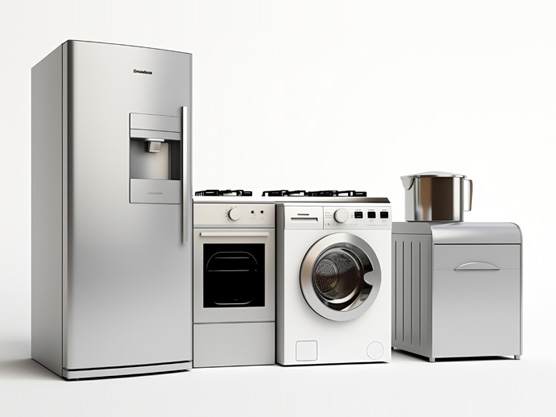
The molding of household appliance parts relies on various molds such as stamping, plastic, foaming, and adsorption, so household appliances are closely related to household appliance molds. In 2010, the production of refrigerators (including freezers) exceeded 100 million units, and a single refrigerator required about 350 sets of molds, including 150-200 sets of plastic molds. In 2010, the production of washing machines was 60 million units, and a single fully automatic washing machine required about 200 sets of molds, worth about 30 million yuan, including 60 sets of plastic molds; In 2010, the production of household air conditioners was 110 million units, and a single air conditioner only required 50 sets of plastic molds; In 2010, the production of color TVs was 120 million units, and a total of about 140 sets of molds were required for a single color TV, with a value of about 7 million yuan. The TV mold alone has an annual market of about 2.8 billion yuan in household appliance molds
In addition, in 2010, the total sales of kitchen and bathroom appliances and small appliances reached 150 billion yuan, accounting for 70% of the global market share. More than 5000 solar water heater companies also achieved a production value of 73.5 billion yuan in 2010, and these appliances also rely on molded products.
Upgrading the home appliance industry brings new challenges
As an extremely important industry in home appliance innovation and large-scale production, the home appliance mold industry has also experienced rapid development in the upgrading of the home appliance industry. The upgrading of manufacturing technology and products for household appliance parts also needs to be achieved through the upgrading of mold manufacturing technology. Therefore, in the transformation of household appliances, molds must be prioritized. The upgrading of the home appliance industry has posed new challenges and issues for China's mold industry.
A mold is not a component and is different from a tool. A mold is a set of molding equipment that combines parts. Modern manufacturing not only requires molds to have high precision and long lifespan, but also requires molds to have clever structural design, well researched molding mechanisms, good usability, and efficient manufacturing performance. Mold companies provide molds while also providing molding process solutions. The requirements of modern manufacturing industry for molds are not only to have a high manufacturing level for a single set of molds, but also to include the requirements for mold usage, speed, efficiency, and quality assurance of the parts. This requires the upgrade of mold products to start with extending the product chain and controlling the entire process from product development to product molding. So home appliance companies should regard molds as one of their core strengths and work together with mold companies to accelerate the transformation and upgrading of China's home appliances.
Molds serve downstream products, and the industrial upgrading and transformation of China's mold industry should meet the requirements of downstream industries and fully integrate with their development. The advancement of manufacturing processes has led to technological progress in the mold industry. The widespread use of composite, multi-color, multi material, and multi-layer forming molds, spray free high gloss seamless molds, and enamel plastic molds has enabled home appliances to continuously explore new fields. On the basis of fully researching the downstream technology and product development of molds, mold technology can be better developed.
With the fierce competition in the home appliance market, mold manufacturing has gradually increased its requirements for complexity, precision, etc., and shell design has become an important part. While new requirements are being put forward for the color, feel, accuracy, and wall thickness of home appliance shells, the overall development of home appliance product shells is moving towards thinness, lightness, and delicacy. With the increasing speed of product updates, new products continue to emerge, and new technologies are advancing rapidly, making the improvement of molding processes booming. The use of molds has become increasingly widespread, and the requirements for molds are also increasing. The composite forming, precision ultra precision forming, special forming, and intelligent forming processes and technologies of metal and non-metal materials have greatly replaced traditional processes such as spraying. The new products of material saving and green molds provide strong support for molding equipment for home appliance enterprises.
In 2009, the sales revenue of China's plastic industry was 600 billion yuan. According to a ratio of 1:100, about 6 billion yuan of sales revenue came from the support of molds. Every year, the demand for plastic in household appliances reaches millions of tons, and the application of plastic in household appliances continues to expand. Various applications of plastic instead of metal have made the application of plastic molds in household appliances more and more widespread. As a guarantee for plastic molding equipment, on the basis of engineering plastics, the application of nanocomposites, composite plastics, sprayable, spray free plastics, fiber-reinforced thermoplastic plastics, etc. will undoubtedly provide new opportunities for the development of plastic molds.
Current situation of home appliance mold industry
From the perspective of the industry layout of household appliance molds in China, the manufacturing of household appliance plastic molds is concentrated in Guangdong, Zhejiang, and Shandong, while household appliance foam molds are concentrated in Chuzhou, Anhui. Household appliance stamping molds are more concentrated in Jiangsu. Various mold enterprise clusters serving large home appliance groups ensure the supply system of home appliance enterprises. At present, domestic home appliance manufacturing molds account for more than 80% of the market share and are fully self-sufficient. Moreover, domestic mold manufacturing enterprises are fully capable of producing molds with high technical requirements, such as large LCD TV plastic molds and backboard stamping molds.
It can be foreseen that large, precise, and well-designed injection molds (mainly for thin-walled products) will receive attention from home appliance companies. Quick response and rapid delivery of accessories are also ensured by advanced mold forming technology to seize market share for home appliance enterprises. Taking Haier as an example, Haier purchases about 6000 sets of molds a year, worth over 500 million yuan. Due to the integration of Haier Mold Company and Haier product design and research and development, this saves valuable time for Haier's products to be quickly introduced to the market.
In 2010, under the influence of China's rapid economic growth and global economic recovery, the mold industry in China achieved good recovery growth in the post crisis period. The total sales of molds in the country reached about 112 billion yuan, a year-on-year increase of over 14%. According to customs statistics, the total import and export volume of molds reached 4.258 billion US dollars in 2010. Among them, the import of molds was 2.196 billion US dollars, a year-on-year increase of 19.15%, and the export of molds was 2.062 billion US dollars, a year-on-year increase of 4.99%. In addition to the traditional markets of the United States, Japan, Europe, and Southeast Asia, China's mold export regions have achieved success in exploring emerging markets such as Brazil, India, Russia, and Australia. At present, China's mold exports have reached more than 40 countries and regions. According to customs statistics, mold exports mainly come from Guangdong, Zhejiang, and Jiangsu, followed by Shanghai, Shandong, Fujian, Tianjin, Liaoning, Beijing, and Jilin. This shows that the Pearl River Delta, Yangtze River Delta, and Beijing Tianjin regions are still developed areas for mold production, and are also gathering areas for household appliance molds. In 2010, China exported stamping molds worth 503 million US dollars, rubber molds worth 1.514 billion US dollars, and other molds worth 178 million US dollars. This shows that the advantages of China's mold industry are still mainly reflected in rubber molds, which also reflects the strong competitiveness of home appliance molds and a more active market. During this period, the growth rate of mold exports exceeded the overall growth rate of the industry, and for the first time achieved a good result of a full year foreign trade surplus.
In May of every Gregorian calendar year and June of a Gregorian calendar year, the China Mold Industry Association will hold the China International Mold Technology and Equipment Exhibition in Shanghai. At this 70000 square meter exhibition, 800 mold companies will participate. The Pure Mold Exhibition Hall will provide a large stage for manufacturing companies to choose mold suppliers and exchange forming technology. At the same time, various activities such as technology and solution case exchange meetings for related products will be held, providing multiple levels and comprehensive communication platforms for enterprises.
The 12th Five Year Plan period is a critical period for China's home appliance industry to move from a major home appliance manufacturing country to a strong home appliance country. To establish a higher-level strategic goal relying on technological innovation, the home appliance industry must have advanced manufacturing technology. Molds undoubtedly play a role in supporting the development of the home appliance industry and achieving advanced molding and manufacturing technology for home appliance components.
The importance of molds
In December 2009, the Ministry of Industry and Information Technology issued the "Guiding Opinions on Accelerating the Transformation and Upgrading of China's Electrical Appliance Industry", which proposed the important task of accelerating the transformation and upgrading of China's household appliances and technology.
At the same time, the rapid upgrading of the consumption structure and large-scale product updates during the 12th Five Year Plan period have also brought new development opportunities to the home appliance industry. In 2010, the manufacturing industry of household electrical appliances achieved a total industrial output value of approximately 900 billion yuan and a total export value of 165 billion US dollars. Among them, the export of white goods (including household air conditioners, refrigerators, freezers, washing machines, and microwave ovens) is about 45 billion US dollars, and the export of black goods (including color TVs) exceeds 120 billion US dollars. In 2010, a total of 77.18 million home appliances were sold in rural areas nationwide, achieving a sales revenue of 173.23 billion yuan, indicating the vast potential of the home appliance market.
The molding of household appliance parts relies on various molds such as stamping, plastic, foaming, and adsorption, so household appliances are closely related to household appliance molds. In 2010, the production of refrigerators (including freezers) exceeded 100 million units, and a single refrigerator required about 350 sets of molds, including 150-200 sets of plastic molds. In 2010, the production of washing machines was 60 million units, and a single fully automatic washing machine required about 200 sets of molds, worth about 30 million yuan, including 60 sets of plastic molds; In 2010, the production of household air conditioners was 110 million units, and a single air conditioner only required 50 sets of plastic molds; In 2010, the production of color TVs was 120 million units, and a total of about 140 sets of molds were required for a single color TV, with a value of about 7 million yuan. The TV mold alone has an annual market of about 2.8 billion yuan in household appliance molds
In addition, in 2010, the total sales of kitchen and bathroom appliances and small appliances reached 150 billion yuan, accounting for 70% of the global market share. More than 5000 solar water heater companies also achieved a production value of 73.5 billion yuan in 2010, and these appliances also rely on molded products.
Upgrading the home appliance industry brings new challenges
As an extremely important industry in home appliance innovation and large-scale production, the home appliance mold industry has also experienced rapid development in the upgrading of the home appliance industry. The upgrading of manufacturing technology and products for household appliance parts also needs to be achieved through the upgrading of mold manufacturing technology. Therefore, in the transformation of household appliances, molds must be prioritized. The upgrading of the home appliance industry has posed new challenges and issues for China's mold industry.
A mold is not a component and is different from a tool. A mold is a set of molding equipment that combines parts. Modern manufacturing not only requires molds to have high precision and long lifespan, but also requires molds to have clever structural design, well researched molding mechanisms, good usability, and efficient manufacturing performance. Mold companies provide molds while also providing molding process solutions. The requirements of modern manufacturing industry for molds are not only to have a high manufacturing level for a single set of molds, but also to include the requirements for mold usage, speed, efficiency, and quality assurance of the parts. This requires the upgrade of mold products to start with extending the product chain and controlling the entire process from product development to product molding. So home appliance companies should regard molds as one of their core strengths and work together with mold companies to accelerate the transformation and upgrading of China's home appliances.
Molds serve downstream products, and the industrial upgrading and transformation of China's mold industry should meet the requirements of downstream industries and fully integrate with their development. The advancement of manufacturing processes has led to technological progress in the mold industry. The widespread use of composite, multi-color, multi material, and multi-layer forming molds, spray free high gloss seamless molds, and enamel plastic molds has enabled home appliances to continuously explore new fields. On the basis of fully researching the downstream technology and product development of molds, mold technology can be better developed.
With the fierce competition in the home appliance market, mold manufacturing has gradually increased its requirements for complexity, precision, etc., and shell design has become an important part. While new requirements are being put forward for the color, feel, accuracy, and wall thickness of home appliance shells, the overall development of home appliance product shells is moving towards thinness, lightness, and delicacy. With the increasing speed of product updates, new products continue to emerge, and new technologies are advancing rapidly, making the improvement of molding processes booming. The use of molds has become increasingly widespread, and the requirements for molds are also increasing. The composite forming, precision ultra precision forming, special forming, and intelligent forming processes and technologies of metal and non-metal materials have greatly replaced traditional processes such as spraying. The new products of material saving and green molds provide strong support for molding equipment for home appliance enterprises.
In 2009, the sales revenue of China's plastic industry was 600 billion yuan. According to a ratio of 1:100, about 6 billion yuan of sales revenue came from the support of molds. Every year, the demand for plastic in household appliances reaches millions of tons, and the application of plastic in household appliances continues to expand. Various applications of plastic instead of metal have made the application of plastic molds in household appliances more and more widespread. As a guarantee for plastic molding equipment, on the basis of engineering plastics, the application of nanocomposites, composite plastics, sprayable, spray free plastics, fiber-reinforced thermoplastic plastics, etc. will undoubtedly provide new opportunities for the development of plastic molds.
Current situation of home appliance mold industry
From the perspective of the industry layout of household appliance molds in China, the manufacturing of household appliance plastic molds is concentrated in Guangdong, Zhejiang, and Shandong, while household appliance foam molds are concentrated in Chuzhou, Anhui. Household appliance stamping molds are more concentrated in Jiangsu. Various mold enterprise clusters serving large home appliance groups ensure the supply system of home appliance enterprises. At present, domestic home appliance manufacturing molds account for more than 80% of the market share and are fully self-sufficient. Moreover, domestic mold manufacturing enterprises are fully capable of producing molds with high technical requirements, such as large LCD TV plastic molds and backboard stamping molds.
It can be foreseen that large, precise, and well-designed injection molds (mainly for thin-walled products) will receive attention from home appliance companies. Quick response and rapid delivery of accessories are also ensured by advanced mold forming technology to seize market share for home appliance enterprises. Taking Haier as an example, Haier purchases about 6000 sets of molds a year, worth over 500 million yuan. Due to the integration of Haier Mold Company and Haier product design and research and development, this saves valuable time for Haier's products to be quickly introduced to the market.
In 2010, under the influence of China's rapid economic growth and global economic recovery, the mold industry in China achieved good recovery growth in the post crisis period. The total sales of molds in the country reached about 112 billion yuan, a year-on-year increase of over 14%. According to customs statistics, the total import and export volume of molds reached 4.258 billion US dollars in 2010. Among them, the import of molds was 2.196 billion US dollars, a year-on-year increase of 19.15%, and the export of molds was 2.062 billion US dollars, a year-on-year increase of 4.99%. In addition to the traditional markets of the United States, Japan, Europe, and Southeast Asia, China's mold export regions have achieved success in exploring emerging markets such as Brazil, India, Russia, and Australia. At present, China's mold exports have reached more than 40 countries and regions. According to customs statistics, mold exports mainly come from Guangdong, Zhejiang, and Jiangsu, followed by Shanghai, Shandong, Fujian, Tianjin, Liaoning, Beijing, and Jilin. This shows that the Pearl River Delta, Yangtze River Delta, and Beijing Tianjin regions are still developed areas for mold production, and are also gathering areas for household appliance molds. In 2010, China exported stamping molds worth 503 million US dollars, rubber molds worth 1.514 billion US dollars, and other molds worth 178 million US dollars. This shows that the advantages of China's mold industry are still mainly reflected in rubber molds, which also reflects the strong competitiveness of home appliance molds and a more active market. During this period, the growth rate of mold exports exceeded the overall growth rate of the industry, and for the first time achieved a good result of a full year foreign trade surplus.
In May of every Gregorian calendar year and June of a Gregorian calendar year, the China Mold Industry Association will hold the China International Mold Technology and Equipment Exhibition in Shanghai. At this 70000 square meter exhibition, 800 mold companies will participate. The Pure Mold Exhibition Hall will provide a large stage for manufacturing companies to choose mold suppliers and exchange forming technology. At the same time, various activities such as technology and solution case exchange meetings for related products will be held, providing multiple levels and comprehensive communication platforms for enterprises.